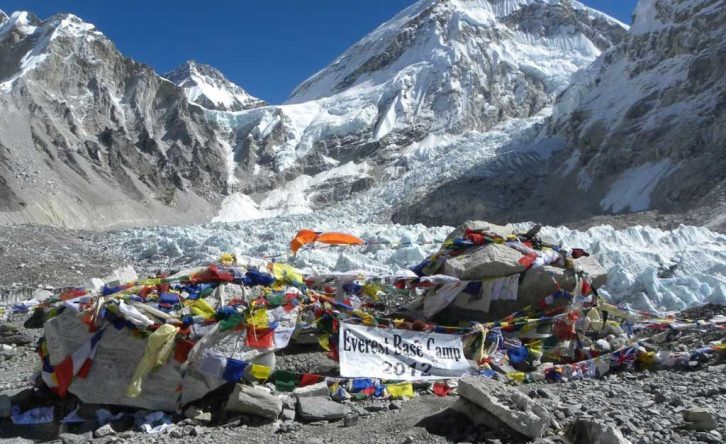
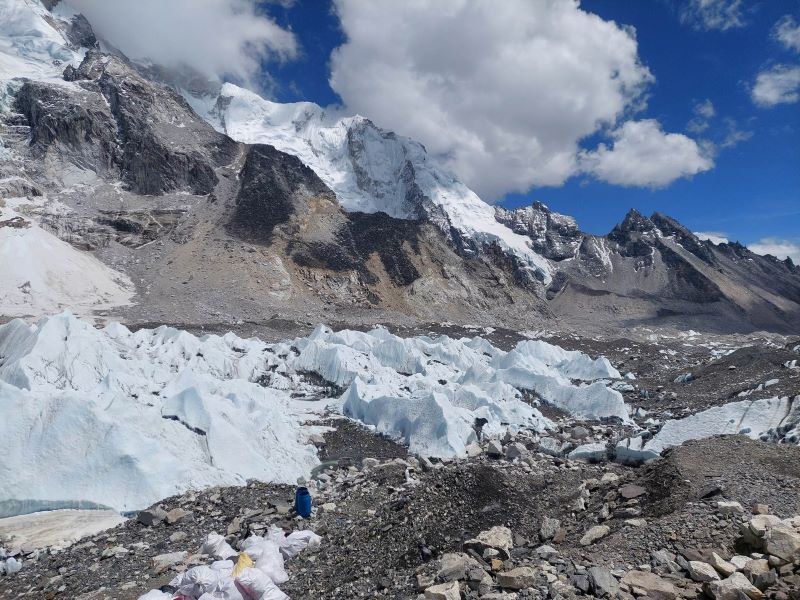
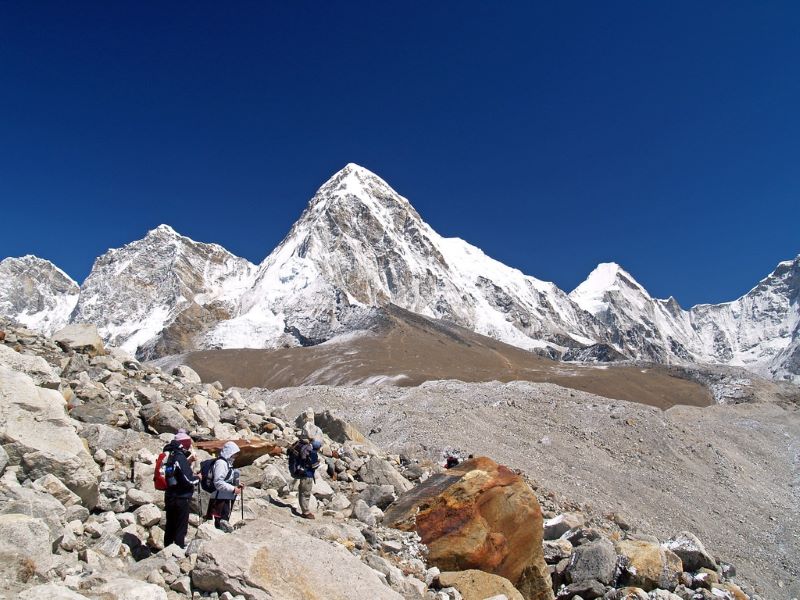
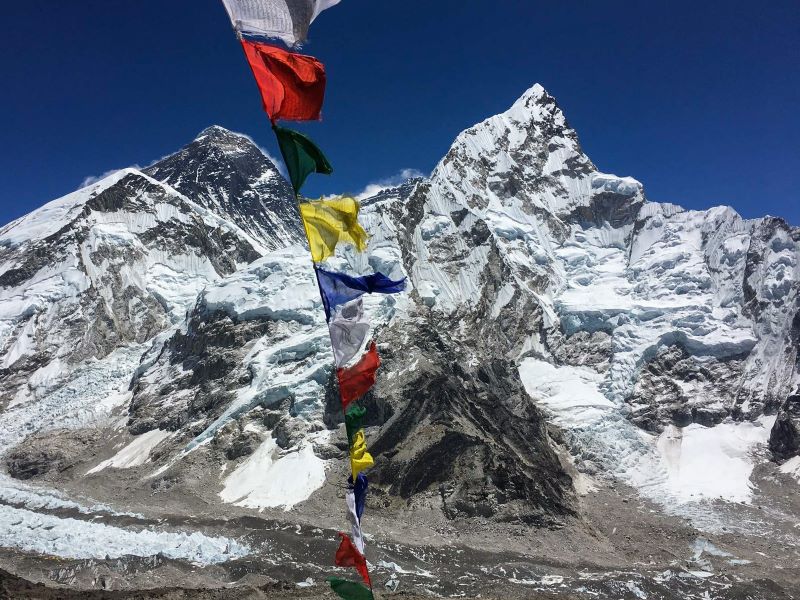
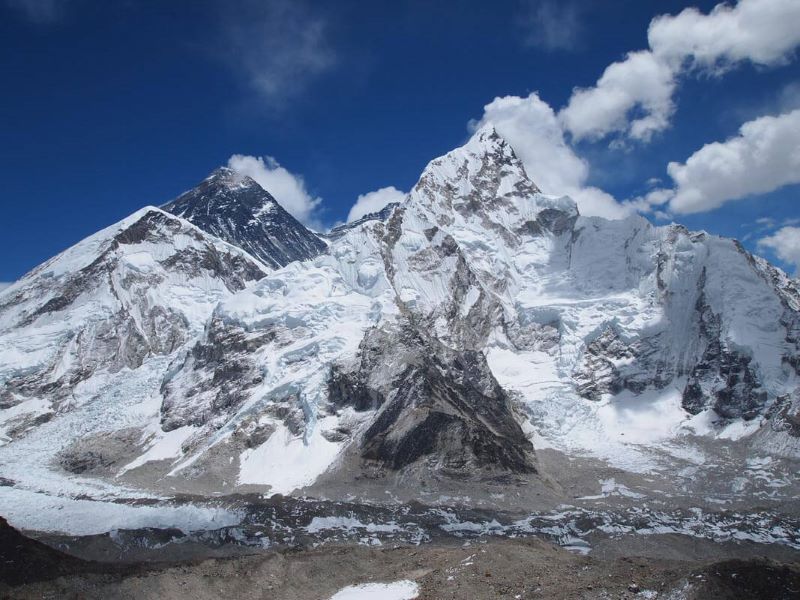
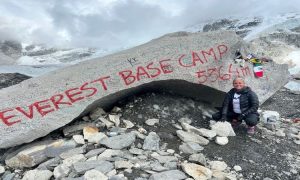
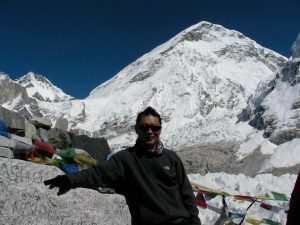
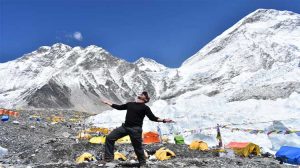
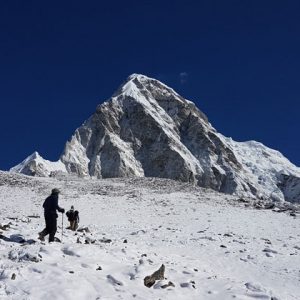
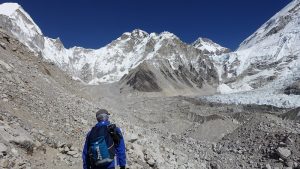
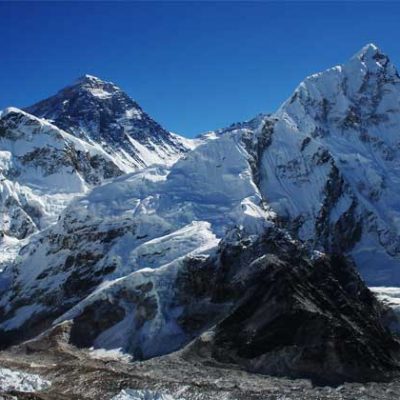
Everest Base Camp Trek is the exciting exploration to the highest peak in the world, Mt. Everest [8,848 meters/ 29,032 feet], is one of the most renowned trekking adventures in the world.
This enriching Everest base camp trekking experience outshines other high-altitude adventures thanks to its unparalleled natural beauty, iconic landmarks, rich Himalayan bio-diversity, culturally enthralling Sherpa settlements, and breathtaking views of the several peaks that take top spots in the 8,000-meter class.
In this exciting journey, you will traverse across a diverse landscape, from forested trails decorated with dotted rhododendron flowers to peaceful meadows and alpine moraines. You will also get the opportunity to relish the rich bio-diversity of the Sagarmtha National Park, which has been conserving the rare species of flora and fauna of the region since 1976.
However, the best of this Himalayan exploration remains the beautiful and charming high-altitude settlements of the Sherpa ethnic group, the Himalayan natives who paved the way for the development of the mountaineering industry. In this Mount Everest Base Camp Trek, you will have a first-hand experience of the Sherpa people’s unique culture, traditions, and heart-warming hospitality.
Our 15 days EBC Trek start from Lukla, The Classic Everest Base Camp trek begins in Jiri, although many people opt to start from Lukla due to the convenience of a 40-minute flight from Kathmandu. However, it’s important to note that during the peak season, Lukla flights divert to Manthali Airport in Ramechhap.
Upon landing in Lukla, your journey officially commences as you join the main trekking route towards Everest Base Camp. The initial leg takes you to Phakding, traversing through picturesque settlements in the region. Namche Bazaar, a bustling trade market, becomes a significant stop where you’ll spend two nights for acclimatization. The following day involves trekking to Tengboche, home to the largest Buddhist monastery in the region.
Continuing your ascent, the next day’s trek leads to Dingboche, a captivating settlement nestled at an altitude of 4200 meters. To ensure a successful trek, an additional acclimatization day is incorporated here. After Dingboche, the journey progresses with an ascent to Lobuche, followed by a trek to Everest Base Camp and a return to Gorak Shep.
Post the base camp experience, you’ll ascend to Kala Patthar to witness the awe-inspiring sunrise over Mount Everest. The trek then retraces its path back to Pheriche, Namche, and finally Lukla, concluding your Everest Base Camp adventure in Nepal.
Everest Base Camp Trek Route Choices
There are generally two trekking routes for the Mount Everest Base Camp Trek: North Base Camp [5,150 meters/ 16,896 feet] on the Chinese side and South Base Camp [5,364 meters/ 17,598 feet] on the Nepali side.
The trekking to Everest Base Camp on the Nepal side is more popular than the Chinese side. Due to the complex permit system on the Chinese side, most trekkers prefer to do the trek to the southern base camp.
The incredible natural allurements, wide Himalayan vistas, diverse landscape in the trekking journey, Himalayan flora & fauna, and the culturally enthralling experience on the Nepali side attract thousands of trekkers every year.
This exciting highest base camp journey in the world starts from Lukla [2,827 meters/ 9,274 feet] and passes through the high altitude settlements of Everest region like Namche Bazaar, Tengboche, Lobuhce, Gorakshep and before the final hike to Everest Base Camp.
Adventure Great Himalaya Company also offers an immersive experience classical route of the Everest Base Camp Trek. The traditional trekking route to the base camp used to start from Jiri; however, for a more convenient approach, the start point in an alternative trekking route has been moved to Phaplu.
You will be able to drive directly to Phaplu from Kathmandu and follow the gradually ascending route to join the mainstream route at Lukla.
Everest Base Camp Trek and Return Helicopter
If you are looking for a more comfortable trekking experience in this exhilarating trekking to Everest Base Camp, Adventure Great Himalaya also offers the 11 Day Everest Base Camp Trek Return by Helicopter.
This exciting trekking package follows the same mainstream trekking route of the general Mount Everest Base Camp Trek. Starting your trek after the Kathmandu to Lukla flight, you will trek through charming Himalayan settlements of Phakding, Namche, Khumjung, Tengboche, Dingboche, Lobuche, and Gorakshep before finally reaching the base camp.
Then, after hiking to Kalapatthar, you will take a helicopter flight back to Kathmandu, enjoying the incredible views of the Himalayan vistas. This exciting helicopter return package for Mount Everest Base Camp Trek is ideal for trekkers who are doing the exploration on a time limit.
As the helicopter return cuts off the return trek to Lukla for the flight back to Kathmandu, the difficulty level also significantly decreases. So, even trekkers who are concerned about the difficulty factors can take part in this exploration without the need to worry about the physical demand in the long haul.
The Everest Base Camp Tours and Alternate Packages
Mount Everest Base Camp Trek is, without a doubt, one of the most remarkable and popular Himalayan trekking adventures. What makes the experience even more enticing is that there are several ways to trek to this popular base camp, which also includes the explorations of the popular highlights in the surrounding region.
Adventure Great Himalaya 15 Day Everest Base Camp Trek package is a standard package with two acclimatization days along the trekking trail. If you are looking for a short variant of the exploration, you can go for the 10 Day Everest Base Camp Trek.
The short packages are designed for trekkers who have limited time on hand. in the 10-day package, the trekkers have to complete the adventure without acclimatization day.
For a more extensive experience in this mainstream trekking region of Nepal, we also offer trekking to Everest Base Camp, including the adventure to the side highlights of the region like:
However, the trekking packages are not all that we offer; we also oversee the climbing peak adventures in the region that you can add to your trekking adventure. Some of our most popular trekking peak expeditions in the 6,000-meter class inside the Everest region are:
The general duration of the Everest Base Camp Trek is 14 to 18 days, and the cost of the trekking packages varies depending on the itinerary plans. That’s why the cost of the trekking packages varies from US$ 1,250 to US$ 2,500 for standard packages.
If you want to add more luxurious amenities to your exploration, like our Everest Base Camp Luxury Lodge Trek, the cost can climb even higher.
The Standard 15 Days Everest base camp Trek Cost USD 1400 per person, This is the best value experience trekking package in the market at a reasonable cost. Your trekking package cost will include the cost for all accommodation & food, permits, guides and porters, domestic flights, land transportation, government expenses, and our official service charge.
We also offers a discounted rate for group bookings for your hike to Everest Base Camp. You can book for the standard EBC Trek at just US$ 1400 if your group has 4 to 8 people. If the group is even larger, with approx. 9 to 12 people, the package will cost only US$ 1,350.
**Note: If you want to explore the Everest region on your own, the package cost for the solo trekkers is US$ 1,500. However, the solo trekking package will not include the cost for porters**
Highlight Of Everest Base Camp Trek
Hiking up to the EBC Base Camp of the highest mountain in the world.
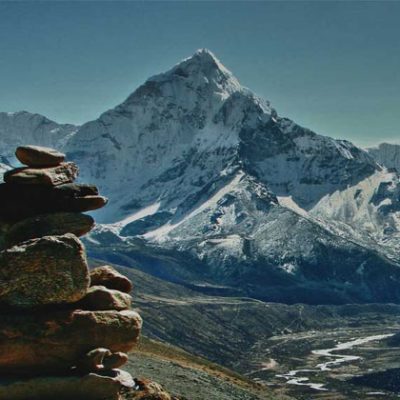
Spectacular views of the mountain ranges such as Mt. Everest, Mt. Ama Dablam, Mt. Thamserku, Mt. Makalu, Mt. Lhotse, and many more.
Exploring the Sagarmatha National Park, UNESCO world heritage site.
Walking to Khumbu ice fall and glacier along the way to the Everest Base Camp.
Exploring the oldest monastery of the Everest region, Tengboche Monastery.
Exploring Sherpa communities.
Climb to Kala Patthar (5545 m) Overview of Mount Everest Sunrise and Sunset View
EBC Trekking Difficulties
Trekking to Everest Base camp straight forward with good and wide path, Walking 6, 7 hour each day from 7 am after breakfast to till 3, 4 pm. Anyone who is reasonably fit will be able to complete this trek. There are no specific exercises for the trek, but some cardiovascular training is always recommended. You should start Cycling, hiking, swimming, climbing or hill walking at least two weeks before the trek.
The trek has a complete itinerary of 15 days and therefore fit for those who have a long holiday planned and want to trek a leisurely pace. The long trekking days also ensure that all the trekkers are properly acclimatized and relaxed even with a long day of trekking.
The risk of altitude sickness is always present. If you are taking some medication, you should consult your doctor for advice for trekking in such high altitude regions. A right level of fitness will make the trek pleasant and comfortable.
Arguably, the best time to Everest base camp Trekis the autumn season of September to November. The trek of Everest base camp from late September to November has many perks.
Some of the major highlights of the trek include the spectacular view of the mountains, moderate trekking temperatures, and unobstructed views of the mountains. There might be some instances of unfavorable conditions which is quite common. The weather around the Everest Base Camp is quite unpredictable in comparison.
The amount of precipitation is quite less in lower elevations and snowfall is less as you move higher along the trail. You should always check for weather conditions before you start the trek and prepare accordingly.
Besides this, the small window from March to May is also a great time to trek the Everest region. The trails look beautiful, and the rhododendron flowers bloom well over the hills painting the hills red and pink. The Everest region has an excellent climate and weather, and the moderate temperatures make for a great trekking experience.
Lukla Flight Information
For your Mount Everest Base Camp Trek, during the peak season months like October, November, March, and April, the flight to Lukla from Kathmandu will divert from Manthali Airport instead of Tribhuvan International Airport (TIA).
Manthali Airport is at a short driving distance of 4 hours from Kathmandu, so you will be able to swiftly transfer to Ramechhap without any delays. If you want to join the trekking trails on the same day as this scenic flight, you will have to get at 2:00 A.M. for the drive to Manthali.
This way, it won’t affect your itinerary plans in the trekking route, as after landing at Lukla, you will have to trek to Phakding for an overnight stay. But, there is also another efficient way to take the flight: you can drive to Manthali and stay there for the night, then take the morning flight to Lukla.
Why Adventure Great Himalaya For EBC Trek
Adventure Great Himalaya Company has been leading the Nepali trekking market as an expert for over a decade and houses expertise with over two decades of experience. In terms of quality of services and amenities, comfort, safety, and best value experience, you will be a leap ahead of other trekkers.
We are also an authentic Nepal-based trekking company and have been collaborating with the local experts of the region to add more enrich your overall experience. If you are planning to book the trek from foreign trekking companies, they don’t have the permit to organize the trip on their own and have to book services with a government-licensed company in Nepal.
So, you will only be paying the extra intermediaries fees for the same packages. Booking our services will ensure that you won’t need to pay any extra commission to a third party and will be able to enjoy an incredible excursion at the best-value cost.
Benefits of Hiring Services of Adventure Great Himalaya
Trek packages designed to emphasize the utmost safety and comfort of the trekkers
Best value price in the market
Expert guides, government-licensed and with relevant number of experience
Free airport pick-up and drop-off facilities
Arrangement of sleeping bag and down jacket if necessary
Free porter with 15kg weight limit per trekker
Small group sizes allocation for a more immersive experience
Customizable itinerary plans befitting your needs
Transparent pricing and an extensive set of inclusions
24/7 available customer service and flexibility in itinerary adjustments
3 Nights twin / Triple sharing at 3 star Hotel in Kathmandu with Breakfast
Meals on the trek ( Breakfast, Lunch, Dinner)
Hot Drinks –Tea / Coffee with meals
Accommodation in Trekking – 11 Night twin sharing Lodge to Lodge Accommodation During the trekking,
All Necessary Trekking Permit ( Sagarmatha national park,Khumbu Local Tax and TIMS Permit)
Kathmandu – Lukla / Kathmandu Flight ticket Limit weight is 10 kg and hand- Cary 5 Kg
Trekking Guide: An experienced, helpful, friendly English speaking trekking guide
Trekking Porter – Carry your Luggage (One Porter for 2 members) No Porter for Solo Trekkers
Guide, Porter, Insurance
Trekking Equipment: Sleeping bag, Duffel Bag a.- Refundable after the trek.
Oxe -Meter- To Check your oxygen saturation and heart rating
Free Everest Trekking map.
Souvenir Company T-Shirt, Hat
All Government Taxes and Service charge.
Service excluded
International Air fair and Nepal entry visa fee
Travel insurance and emergency rescue evacuation.
All bar bills, bottle of drinks, extra drink, tea, coffee etc
Wi- Fi, Hot Shower
Electronic device re-charge such as Mobile, Camera etc.
Tips
More Information
Lukla Flight & Weather
Lukla rests perfectly on a hilltop surrounded by mountains on all three sides. There are no direct roadways to reach Lukla from Kathmandu, only flight options. Plus, its airport is known as the world’s most thrilling one due to the short runway.And There are mainly 3 airlines are having regular flights to Lukla from Kathmandu.
Currently, flights are the only direct transportation available from Kathmandu to Lukla. So, the weather has a significant impact on its flight schedule. During dramatic climatic conditions, the chances of flight delay and cancellation are high.
Afraid of flight cancellation? Worry not, you can take helicopters from Kathmandu to Lukla / or return Kathmandu. The helicopter cost would be $350-$500 per person for one way flight.
Note: If the weather is worst and no visibility, helicopters also might not make flights.
So, the flights are only scheduled in the mornings because the weather is evident in the mountains at that time. A tailwind slowly builds up by afternoon, making it impossible to fly and navigate the landing.
Also, the visibility and seasonality add up to it. During monsoon, the rain clouds come into play with thunderstorms and wind, while in winter, the fog impacts the flight creating high chances of flight cancellations and delays.
Traveling during bad weather conditions is the worst scenario possible, so always read the weather forecast or travel during peak seasons. Weight restrictions: Flying to Lukla, the weight limit is 15 kg per person, You can carry maximum 10Kg of luggage and maximum 5kg of hand-carry. If you want take More than weight limit, it will cost you US$ 1 for extra Kilograms .
EBC Trek Altitude Sickness & prevention
Typically, Trek to Everest takes you above 5000m elevation. So, altitude-related sickness is the most common problem you face during this journey.
Most travelers think AMS occurs when you travel above 3500 m, and this trip begins from 2800 m altitude. So, the chances of altitude sickness are high during Everest Base Camp Tour.
Headache, vomiting, nausea, dizziness, shortness of breath are some of the usual signs of altitude-related sickness. If you start to detect any of the symptoms, inform your guide and follow their instructions.
When suffering from AMS, do not continue the trek; instead, stay in the same destination or head to lower areas.
Trekking to Everest Base Camp is not an easy journey, but with some tips, you can make it a bit easier:
Do not consume alcohol or smoke cigarettes
Avoid eating meats in this trek as they are not fresh and hygienic.
Keep yourself hydrated by drinking 3 to 4 liters of water each day.
Walk slow and steady while covering 10 to 15 km each day.
Required Trekking Permit
Without trekking permits, you cannot complete your Everest Base Camp Tour journey. So, for this trip, you are required to carry two permits: Sagarmatha National Park Entry Permit and Khumbu Rural Municipality Entrance Permit.
Khumbu Rural Municipality Entrance Permit costs NRP 2000; $20 (for all visitors). Likewise, Sagarmatha National Park Entry Permit costs NRP 3000; $30 (for Foreigner) and NRP 1500; $15 (for SAARC).
Nepal EBC Trek Distance
Everest Base Camp Trek, one of the iconic treks in the world, is about 130 km long in total. That means while you trek toward Everest Base Camp, you will cover 65 km. And 65 km more while returning from Everest Base Camp. You must cover a 130 km distance to complete it, starting and ending at Lukla.
The Everest Base Camp Trek distance is easy, moderate, or difficult. It depends on your experience level and preparation. If you have been on similar treks in the Himalayas, the trek’s distance is okay.
However, it can be a bit demanding and massive for beginners. You have to cover a distance of 15 km per day on average. The trail is rough, rocky, steep, slippery, and sometimes descends. The conditions might slow you down. Otherwise, 15 km a day is relatively easy. You’ll have around 6-10 hours daily to cover that distance. Come well-prepared to cover an average of 15 km per day. And you will have a walk of life.
Nepal EBC Trekking Travel Insurance
Travel Insurance is mandatory if you want to begin your Everest Base Camp Trek Nepal. It is because no one can predict what mishaps can happen in the mountains, so having insurance covers these issues.
While choosing a company, make sure their plan covers all medical and travel problems like altitude sickness, emergency rescue, sprained ankle, and more. The insurance plan should be able to give you facilities like helicopter rescue, clinical attention, air ambulance, and so on.
Most importantly, many insurance companies do not cover treks above 4000 m, so make sure your cover trips above 5000 m altitude. With travel insurance, you can complete your expedition with no worries.
Trekking Guide for EBC Trek
Trekking solo is possible for Everest Base Camp Trek, but we recommend not to because the routes are mentally and physically challenging. So, if you dislike traveling in groups, you can hire experienced guides for extra comfort and a stress-free trek.
Having a guide will not only help you with navigation, but they will also take care of your security and safety. They will be your closest companion who helps you connect with local culture and communicate with the people.
Trekking Porter – For Carry Your Luggage
Having a porter lessens your baggage weight, as they carry all your heavy belongings allowing you to enjoy the trek without feeling fatigued. They are also the locals of these areas, so they know many shortcuts. Porters are less expensive in comparison with licensed guides and a great companion with basic English speaking skills.
How Much Tip for Guide, Porter to EBC Trek
Tipping is a lovely gesture to service providers around the world. And it is no new in Nepal’s trekking trails. After loving the service of their guides and porters, trekkers want to offer some tips to them. Tipping is not compulsory, but it can surely make your porter and guide’s day. It is all your choice.
As it is optional, there is no exact number for tipping. You can give as much as you like. Still, if we have to help with how much to offer, we would suggest you a suggestion. If your trek is ten days long, you can give them around USD 10 to 15 per day as a tip. So you can use this rate to tip your guide or porter. That is a standard tip amount. If you can give more or less, that is no problem.
There is no need to tip your team every day. You can just complete the trip and pay them at last. Make sure the given amount goes into the hands of the right people. You can use an envelope to give a gratuity.
Hot Shower
Almost 95% of tea houses and lodges have a hot shower facility during the EBC trek. In lower areas like Namche, Phakding, you can quickly get a hot bucket or tap shower at a low price. However, the hot showers are expensive as you ascend above to Dingboche, Gorak Shep, Tengboche, etc. Getting running water is a challenge in the upper region, so bucket water is better.
How much Money Carry for EBC Trek?
Even though our package covers most of your costs like meals during the trek, accommodation, Guide, Porter, Lukla flight etc., it doesn’t cover your personal bills. So, you need to carry extra cash to pay for your beverages, restaurants, snacks, souvenirs, hot showers, and more.
Each day you might spend about $15 to $20, depending on your spending habits. So, carry the equivalent money for payment as the shops in the mountains do not accept visa cards or e-payment.
Toiletry and Room
Basically, Everest Base Camp Trek is a tea house trip, so all the accommodations provide simple facilities. The rooms are primarily twin-sharing, so you have to share them with other travelers. Each room consists of beds, pillows, and blankets, but they are warm and cozy.
As for the toilets, you find attached bathrooms in lower regions, but you only find shared bathrooms as you keep ascending.
EBC Trek Equipment List
For the Everest base camp trek, The following Items are recommended for every trekker , This List is only for Guide. There are numerous option brands and versions of each piece of equipment. EBC Trek Packing list
EBC Trek Booking & Cancellation
Before preparing for your treks, you should carefully read the booking terms and conditions. If you wish to book your trip with us you should send a completed booking form and a scan of your passport along with a 20% amount of the trip.when you pay deposit then your trip is confirmed.
The trip deposit can pay by online, or pay directly through the bank, they impose a service charge. Please note that the initial booking deposit is not refundable if you cancel 45 days prior to departure
The remaining balance, you need to pay after arriving in Nepal. It is to be paid in USD or Nepalese rupees in cash before your departure. If you pay via debit or credit card, an additional fee of 13% will be charged to cover the tax and vat.
This was absolutely the most amazing trip. Adventure Great Himalaya took care of me from the time I landed in Kathmandu until I flew home. They are very knowledgeable about…
This was absolutely the most amazing trip. Adventure Great Himalaya took care of me from the time I landed in Kathmandu until I flew home. They are very knowledgeable about the city and the mountains and treat their guests like family. I’m hoping to go back in a couple of years and do another of their treks. I absolutely recommend using them for your next Himalaya adventure! Love this company!!
Trekking to Kala Patthar EBC with best Trekking Agency in Nepal
I just came back from an amazing experience i had with Adventure Great Himalaya and their guide Nabin. Everything was perfect, i cant think of anything which wasnt. All the…
I just came back from an amazing experience i had with Adventure Great Himalaya and their guide Nabin.
Everything was perfect, i cant think of anything which wasnt.
All the lodges, the food, the service while organizing the whole trip via email , the service provided by nabin during trekking, everything was brilliant.
I was trekking on the EBC trek to kala patthar which is summited, it has been an adventure of a lifetime and i can highly recommend adventure great himalaya, which is a highly professional, very fair and honest company.
100% Support!
And if you ever end up in the office of Mr. Karki , try the Masala Tea from next door, its probably the best in Nepal !
Trekking to Everest Base Camp was my lifetime ambitious. I fulfilled it in October 2011. It is my lifetime experience and my life’s most memorable moment. The moment I reached…
Trekking to Everest Base Camp was my lifetime ambitious. I fulfilled it in October 2011. It is my lifetime experience and my life’s most memorable moment. The moment I reached the Everest base camp and the top of Kala Patthar was really awesome. It was like you were on the top of the world….well, not quite, but the sense of achievement you felt was beyond words. All these would not make possible without Adventure Great Himalaya Trek & Expedition (P) Ltd. Thanks to Mr. Babu (Managing Director of Adventure Great Himalaya).
I traveled alone and joined with a group of 15 trekkers from UK. I felt very comfortable with the group I went with. They were friendly and not to mentioned very funny as well. We turned into friends almost instantly. There were a lot of fun traveling with them and I am glad to have their company on my trip.
Our trek was fantastic. Everything was very well organized. Even when we had bad weather in Lukla and could not fly back to Kathmandu, the tour guide and the Trekking company managed to rearrange everything and we flew back to Kathmandu next morning.
On our trek, breakfast, lunch and dinner were very well served. We chose what we want from the menu. Food was fantastic and cooked in “clean” and “safe” kitchens. Adventure Great Himalaya provides us with great porters and lovely guides. Guides are very knowledgeable and have great experience in the Himalaya region. They were friendly , spoke good English and great singers as well. They always made sure that we got the best rooms in the lodge. Every night after dinner, we were brief by guides on the journey ahead next day. I personally found this very useful and communicative.
In Himalaya region, everywhere you look, there is great view. The astonish view is way beyond words could description. The sheer size of the mountains and valleys is something I have never experienced. Thanks to Adventure Great Himalaya for making my EBC trek a wonderful and memorable experience. If I decide to go back for another adventure in Nepal, I will definitely go with Adventure Great Himalaya. NAMASTE.
This trip from start to finish was an absolute adventure. I arrived later than I thought I would in Kathmandu and Great adventure Himalaya made it accommodating for me. Well,…
This trip from start to finish was an absolute adventure. I arrived later than I thought I would in Kathmandu and Great adventure Himalaya made it accommodating for me. Well, we started off from Kathmandu and met our Guide Santosh(amazing guide from start to finish) and got to the airport and flew to Lukla. From there the trekking began. My friend and I are fast hikers and made up incredible time. Santosh, our guide, really took amazing care of my friend and I. The price we paid was one of the best you’ll find out there. If your thinking about doing this without a guide, that would be stupid. 2 people died on the trail who didn’t have guides while we were there. Plus it was a lot of fun with ours.
This is a trip I will remember for the rest of my life.
I did the E.B.C trekking with this company in March 2017. This is Very good company for Everest Base camp Trek. The Company professional, helpful and approachable. I booked the…
I did the E.B.C trekking with this company in March 2017. This is Very good company for Everest Base camp Trek. The Company professional, helpful and approachable. I booked the trek as a solo female traveler. I felt safe throughout my time with the company. The trek was amazing, a once in a lifetime must do trek. I was provided with a guide and a porter by the company, both of whom were professional and very helpful. The trek its self was medium to hard and tiring of course but worth it! The scenery is just amazing no words can describe it. All the arrangements were made by the company, hotel stays, return flights from KTM to Lulka, all food and drinks during the trek. I hope to book another trek with the company in the future. A dream come true thank Adventure Great Himalaya.
This is my second time engaged Adventure Great Himalaya for my trekking in Nepal, first in ABC and this time is Everest Base Camp Trek. The company owner, Mr. Babu…
This is my second time engaged Adventure Great Himalaya for my trekking in Nepal, first in ABC and this time is Everest Base Camp Trek.
The company owner, Mr. Babu Karki, is a helpful and kind person, he will answer to all of your enquiry before you depart from your home country. His arrangement of the trip is perfect, immediately after you stepped out from the arrival hall of airport, his staff will be there waiting for you. During the trekking day, he will always keep in touch with the guide to ensure the condition and progress of the guest.
Mr Babu has very high requirement of the guides he employed, the guide that I got for this 15 days, Kirshna, is very professional and experienced. He is very familiar with EBC route, he knows exactly how long to take to reach to next pit stop. He even become the pace maker for us, he adjusted the trekking pace based on my physical condition, this is really helpful and I barely feel any tiredness after the everyday trekking.
Regarding the charges, I did some comparison before I decided to choose Adventure Great Himalaya, the charges is very reasonable. After completed the trip, I will say the charges is very value for money because the service provided by them is equivalent to others big company if not better than them. The guide i got is better than those big company and I am staying at the same lodge with those who engaged big company as their agency.
i will highly recommend anyone who is planning to travel to Nepal to check out with Adventure Great Himalaya, you will never regard of your choice!
Did the Everest base camp trek with this company. It was an amazing and a life changing experience. Its a little tiring trek but when you reach the base camp…
Did the Everest base camp trek with this company. It was an amazing and a life changing experience. Its a little tiring trek but when you reach the base camp you realize all the blood, sweat and tears were worth it. The arrangements were very smooth and efficient. The guide and porter were very helpful and friendly. The flight bookings, hotel bookings and food everything was right on schedule. Hope do do some more treks with this company again. You pass beautiful places like Namche bazaar, Tingboche and Gorakshep on the way. Loved the serene beauty of Tingboche especially the monastery. Would definitely recommend this trip to everyone.
The services by AGH is always excellent and wonderful! I've trek with them on 4 different occasion (3 on EBC, Island Peak and one in Langtang) and without fail, I've…
The services by AGH is always excellent and wonderful! I’ve trek with them on 4 different occasion (3 on EBC, Island Peak and one in Langtang) and without fail, I’ve always have a wonderful experience. Babu, the managing director of AGH and all their staff is always very accommodating and really helpful!
The guides of AGH, particularly Nabin (he guided me on 3 different occasion) and Nanda is excellent, they go above and beyond what is required of them. I have them to thank for guiding me safely throughout the treks. They are to me, a friend and guide.
I will continue again and again to use AGH for all my future trips to Nepal! If you ever needed an adventure operator in Nepal, AGH is the go to agency!
My sister and I decided we wanted to go trekking to Mount Everest Base Camp. Thanks to Adventure Great Himalaya we had a fantastic experience! It was everything we could…
My sister and I decided we wanted to go trekking to Mount Everest Base Camp. Thanks to Adventure Great Himalaya we had a fantastic experience! It was everything we could have asked for and more. The staff and the guides were super professional and knowledgeable. We are so happy we decided to use a local company. Thank you for everything!!!
Im Oktober 2010 lief ich zusammen mit drei Freunden den Everest Base Camp Trek. Unser Guide hiess Nabin. Er war nicht nur Jemand, der uns den Weg gezeigt hat, sondern…
Im Oktober 2010 lief ich zusammen mit drei Freunden den Everest Base Camp Trek. Unser Guide hiess Nabin. Er war nicht nur Jemand, der uns den Weg gezeigt hat, sondern er hat auch versucht uns so gut wie moeglich die nepalesische Kultur naeherzubringen. Am Ende unseres insgesamt drei Wochen andauernden Aufenthalts in Nepal hatten wir zu ihm dann ein sehr freundschaftliches Verhaeltnis.
Leider bekam ich kurz vor dem Ziel die ersten akuteren Symptome von Hoehenkrankheit, so dass wir ein paar Tage vorher umkehren mussten. Die so gewonnene Zeit verbrachten wir in Kathmandu, wo Nabin uns dann noch ueber mehrere Tage verteilt die Stadt gezeigt hat. Außerdem hat Babu uns noch einen Rafting Ausflug organisiert.
Alles in Allem muss ich sagen, dass uns Babu und sein Team vom Moment unserer Ankunft in Kathmandu bis zu unserer Abreise einen hervorragenden Service boten. Beim naechsten Trip nach Nepal, welchen es definitiv geben wird, werde ich mich daher definitiv wieder an Adventure Great Himalaya wenden.
Trekking to Everest Base Camp was my lifetime ambitious. I fulfilled it in October 2011. It is my lifetime experience and my life’s most memorable moment. The moment I reached…
Trekking to Everest Base Camp was my lifetime ambitious. I fulfilled it in October 2011. It is my lifetime experience and my life’s most memorable moment. The moment I reached the Everest base camp and the top of Kala Patthar was really awesome. It was like you were on the top of the world….well, not quite, but the sense of achievement you felt was beyond words. All these would not make possible without Adventure Great Himalaya Trek & Expedition (P) Ltd. Thanks to Mr. Babu (Managing Director of Adventure Great Himalaya)
I travelled alone and joined with a group of 15 trekkers from UK. I felt very comfortable with the group I went with. They were friendly and not to mentioned very funny as well. We turned into friends almost instantly. There were a lot of fun travelling with them and I am glad to have their company on my trip.
Our trek was fantastic. Everything was very well organized. Even when we had bad weather in Lukla and could not fly back to Kathmandu, the tour guide and the Trekking Company managed to rearrange everything and we flew back to Kathmandu next morning.
On our trek, breakfast, lunch and dinner were very well served. We chose what we want from the menu. Food was fantastic and cooked in “clean” and “safe” kitchens. Adventure Great Himalaya provides us with great porters and lovely guides. Guides are very knowledgeable and have great experience in the Himalaya region. They were friendly; spoke good English and great singers as well. They always made sure that we got the best rooms in the lodge. Every night after dinner, we were brief by guides on the journey ahead next day. I personally found this very useful and communicative.
In Himalaya region, everywhere you look, there is great view. The astonish view is way beyond words could descript. The sheer size of the mountains and valleys is something I have never experienced. Thanks to Adventure Great Himalaya for making my EBC trek a wonderful and memorable experience. If I decide to go back for another adventure in Nepal, I will definitely go with Adventure Great Himalaya.
Note:Please ensure names
must be exactly the same as your passport (for ticketing/security
purposes). You could incur extra costs or even miss your flight if the
names are not correct.